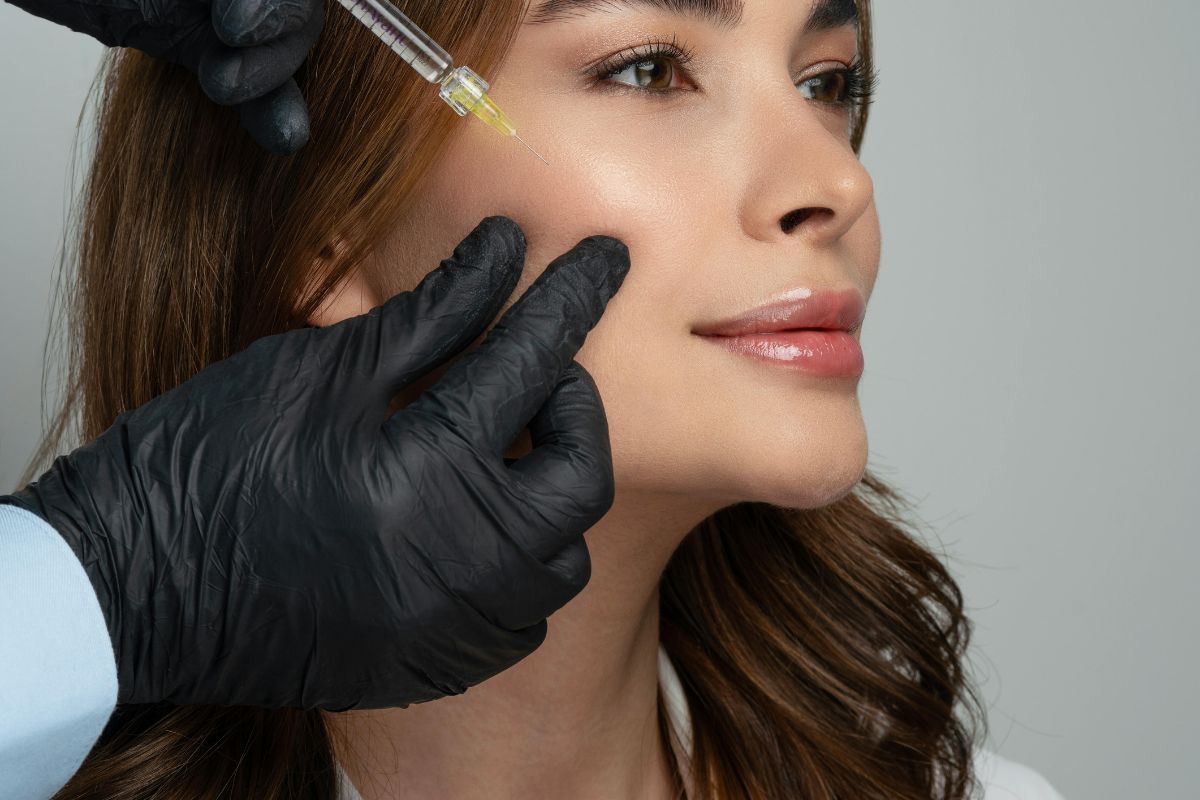
What Is Skin Longevity? A Modern Approach to Anti-Aging
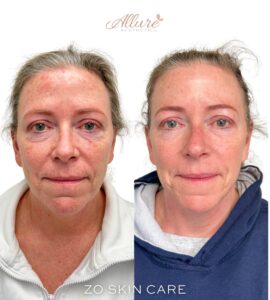
For years, the conversation around aging has centered on one question: How do I stop it?
But getting older isn’t the problem.
Your face changing over time isn’t something that needs to be erased. The more interesting question is: How can we support our skin, preserve what we love about our features and age as gracefully as possible?
Enter skin longevity.
The term is having a moment in aesthetics, and it reflects a shift away from the idea that aging is something to fight. Skin longevity isn’t a treatment or a package. It’s an approach: caring for skin quality over time, understanding how skin changes, and sequencing treatments so they work together rather than in isolation.
Great aesthetic work shouldn’t make you look younger than you are. It should leave you looking healthy, rested and like yourself.
What Happens to Your Skin Over Time?
Collagen gives your skin much of its structure and its ability to recover. We produce less of it as we get older, and research comparing sun-protected skin has found substantially lower collagen production in older skin than in younger skin (Varani et al., 2006).
Collagen isn’t the only thing changing. Years of sun exposure, air pollution and other environmental factors contribute to visible skin aging as well (Krutmann et al., 2017), and elastin, hydration and the structures beneath the skin shift over the same period. Skin quality and facial structure tend to change together, which is one reason treating a single area in isolation rarely produces a natural-looking result.
You also can’t apply collagen to the surface of the skin and expect it to replace what has been lost, since the molecule is too large to reach the layer where it would need to work. What certain treatments can do is encourage your skin to produce more of its own, gradually.
How Treatments Fit Into a Skin Longevity Plan
No single treatment addresses everything, and the most natural results come from understanding what each one contributes and when it belongs in the plan.
Collagen-stimulating treatments work slowly, which is what makes them the foundation of a long-term approach rather than a correction. Sculptra uses poly-L-lactic acid to prompt collagen production, and tissue studies have shown measurable increases in type I collagen at three, six and twelve months after treatment (Goldberg et al., 2013). Microneedling takes a different route, using controlled micro-injury to stimulate your skin’s own healing response, with one study finding increased collagen and elastin six months afterward (Aust et al., 2008). Hyperdilute Radiesse can be spread across an area rather than placed in a single spot. All are planned as a series, and the result develops over months.
PRF with the Selphyl System uses components of your own blood, drawn in a small sample and processed into a platelet-rich fibrin matrix before being injected. We use it for skin quality: tone, texture, under-eye darkness and a generally tired appearance. A 2025 systematic review of 20 studies found the strongest evidence for improvements in skin thickness and elasticity, with more mixed findings for texture and pigmentation (Qin et al., 2025). Within a longer plan it works alongside the collagen-stimulating treatments and is often combined with microneedling in the same appointment.
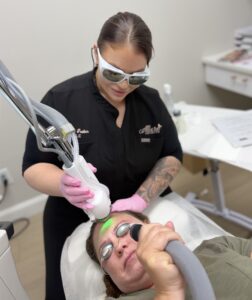
Halo Tribrid addresses the surface of the skin: texture, pigmentation and the effects of accumulated sun exposure. We generally plan it as a single session once a year, treating more corrective cases more often. Resurfacing involves genuine recovery time, so it is placed thoughtfully within the year rather than scheduled around a particular date.
Daily skincare maintains the work between appointments. Broad-spectrum sunscreen protects against ongoing UV exposure, and a well-tolerated retinoid supports collagen and skin renewal over time. Both depend on consistency, and neither produces change overnight.
Facial balancing with filler addresses proportion and structure rather than skin quality. It belongs in a skin longevity plan for exactly that reason. Considering skin quality and facial structure together keeps any single treatment from being asked to do more than it reasonably can.
What Can Skin Longevity Actually Do?
It can improve skin quality, firmness and texture, and help maintain those results with continued care. What it cannot do is stop aging, and no treatment available does.
Some concerns also sit outside what aesthetic treatment can reasonably address. Significant loose skin along the jaw or neck, for example, may call for a surgical approach, and when that is the better option we refer you to a surgeon we work with rather than recommending something that won’t give you the result you are looking for.
So, What Does a Skin Longevity Plan Look Like?
It is built around the individual, so the details differ. Some treatments need months to develop, others require recovery time, and skincare depends on consistency. Facial balancing may make sense now or be better placed a year from now. Sequencing all of that appropriately is most of what a good plan does.
Rather than treating the forehead, cheeks, lips and jawline as separate concerns, we look at the face as a whole, and at skin quality and facial structure together. That is the thinking behind The Full Face Refresher®.
In the HARMONY study, patients treated across multiple areas of the face in a single plan reported significant improvement in satisfaction with their appearance over four months. The study wasn’t designed to compare whole-face treatment against treating one area alone, so it tells us about the result rather than the comparison (Weinkle et al., 2018).
Your plan is built around your skin, your features, your goals and the amount of treatment that genuinely makes sense for you. Some things are worth starting now and others can wait, and occasionally the most useful recommendation is no additional treatment at all.
If you would like to know what this could look like for you, book a new client appointment. We will look at the whole picture and help you decide where to begin.
Frequently Asked Questions
What is skin longevity?
Skin longevity is an approach focused on supporting skin health over time rather than correcting signs of aging once they appear. In practice it means caring for skin quality, supporting collagen and planning treatments around how they actually work.
At what age should I start thinking about skin longevity?
There’s no single age that applies to everyone. Collagen production begins to slow before many visible changes appear, so the more useful question is what your skin is doing now and what you’d like to maintain over time.
How is skin longevity different from anti-aging?
The treatments themselves are largely the same. The difference is in how they’re approached and timed. Rather than waiting for changes to become pronounced, a skin longevity approach focuses on maintenance and thoughtful planning.
How long does it take to see results?
It depends on the treatment. Collagen-stimulating treatments develop over several months and are usually performed as a series. Resurfacing improves texture and tone over the weeks following treatment, and skincare needs consistent use over months.
Do I have to keep up with treatments?
Many aesthetic results aren’t permanent and are maintained with continued care. The goal is a sustainable plan that fits your skin, your goals and your life, not an endless list of appointments.
What’s the difference between a biostimulator and filler?
Biostimulators encourage your own collagen production and work gradually over time. Facial balancing with filler addresses proportion and structure more immediately. The two can complement each other and are often sequenced as part of a broader plan.
References
Aust, M.C., Fernandes, D., Kolokythas, P., Kaplan, H.M. and Vogt, P.M. (2008) ‘Percutaneous collagen induction therapy: an alternative treatment for scars, wrinkles, and skin laxity’, Plastic and Reconstructive Surgery, 121(4), pp. 1421-1429. doi: 10.1097/01.prs.0000304612.72899.02
Goldberg, D., Guana, A., Volk, A. and Daro-Kaftan, E. (2013) ‘Single-arm study for the characterization of human tissue response to injectable poly-L-lactic acid’, Dermatologic Surgery, 39(6), pp. 915-922. doi: 10.1111/dsu.12164
Krutmann, J., Bouloc, A., Sore, G., Bernard, B.A. and Passeron, T. (2017) ‘The skin aging exposome’, Journal of Dermatological Science, 85(3), pp. 152-161. doi: 10.1016/j.jdermsci.2016.09.015
Qin, N., Kochheiser, M., Akosman, I., Dugue, D., Raghunandan, A., Pavuluri, C., Gundlach, C., Vaeth, A.M., Wei, L., Wesorick, B.R. and Otterburn, D.M. (2025) ‘Systematic Review of Platelet-Rich Plasma and Platelet-Rich Fibrin in Facial Rejuvenation’, Annals of Plastic Surgery, 94(4S), pp. S376-S389. doi: 10.1097/SAP.0000000000004267
Varani, J., Dame, M.K., Rittie, L., Fligiel, S.E.G., Kang, S., Fisher, G.J. and Voorhees, J.J. (2006) ‘Decreased collagen production in chronologically aged skin: roles of age-dependent alteration in fibroblast function and defective mechanical stimulation’, The American Journal of Pathology, 168(6), pp. 1861-1868. doi: 10.2353/ajpath.2006.051302
Weinkle, S.H., Werschler, W.P., Teller, C.F., Sykes, J.M., Shamban, A., Rivkin, A., Narurkar, V.A., Kaminer, M.S., Dayan, S., Cohen, J.L. and Gallagher, C.J. (2018) ‘Impact of Comprehensive, Minimally Invasive, Multimodal Aesthetic Treatment on Satisfaction With Facial Appearance: The HARMONY Study’, Aesthetic Surgery Journal, 38(5), pp. 540-556. doi: 10.1093/asj/sjx179