
Six Things That Make the Greatest Difference in Your Laser Results
There’s a reason fall is often called laser season. As time outdoors and sun exposure begin to ease, many people start thinking about addressing the visible effects of summer including uneven tone, sun damage, redness, texture, and a complexion that simply feels ready for a refresh.
The technology used for your treatment matters, but the device alone does not determine the result. Equally important is the expertise behind it: understanding what each technology targets, how deeply it works, where its limitations are, and how to customize the treatment around your skin, goals, lifestyle, and comfort with recovery.
The best laser results begin well before the day of your appointment. Thoughtful preparation, careful treatment planning, appropriate technology selection, and consistent aftercare all play a role in helping you achieve healthier-looking, more radiant skin.
Here are the six things that can make the greatest difference.
1. The Weeks Before: Preparing and Protecting Your Skin
Great laser results begin before the day of your treatment. The weeks leading up to your appointment give us time to evaluate recent sun exposure, support your skin when needed, and recommend any individualized preparation that may help us treat more safely and effectively.
Sun exposure is especially important when we are treating pigmentation. A recent tan increases the amount of melanin competing for the treatment’s energy, which can limit how aggressively we can treat and increase the risk of an unwanted pigment response. Allowing your tan to fully resolve helps us select safer, more effective settings.
Because a tan fades over weeks rather than days, it is helpful to plan ahead. If additional time away from the sun or more preparation would improve the safety or quality of your treatment, we will recommend waiting rather than compromising your plan. Preparation varies by treatment, skin tone, current skin condition, pigmentary risk, and recent exposure, so there is no single timeline that applies to everyone.
Some patients may also benefit from a customized preconditioning skincare regimen before treatment. This is particularly important for those with a greater risk of developing post-treatment pigmentation. Rather than starting products on your own, we will evaluate your skin and determine whether additional preparation, potentially including a personalized ZO® Skin Health regimen, is appropriate for you.
The goal is not simply to prepare you for a laser appointment. It is to make sure your skin is in the best possible position for a safe treatment, a smooth recovery, and a beautiful result.
- The Consultation: Understanding Your Skin and Your Lifestyle
A thoughtful consultation begins with a comprehensive assessment of your skin. We look at the type and distribution of pigmentation, vascular redness, texture, pores, scarring, signs of aging, skin tone, and how your skin has responded to previous treatments. Because these concerns may exist at different levels of the skin, they may require different technologies or a carefully planned combination.
An equally important part of treatment planning is understanding how the treatment will fit into your life.
Your sun exposure, travel plans, upcoming events, work schedule, recovery preferences, budget, and ability to maintain your results can all influence the recommendation. Someone who spends a great deal of time outdoors may need a different plan than someone with minimal sun exposure. A patient preparing for a special occasion may also have different timing and downtime needs than someone with a more flexible calendar.
These questions are not small talk. The best clinical treatment is only the right treatment when it can be performed safely, supports your goals, and realistically fits your life.
A consultation also helps us recognize when laser treatment is not the right solution. Lasers can create meaningful improvements in skin quality, tone, texture, pigmentation, and certain signs of aging, but they do not replace surgery when significant tissue laxity or structural lifting is the primary concern. When another option would better serve you, we will be honest about that and help guide you toward the appropriate next step.
Patients should feel comfortable asking who will perform their treatment, how that provider was trained, how treatment settings are selected, and what clinical support is available throughout the process. At Allure, every recommendation is guided by clinical appropriateness, safety, and the treatment plan we believe will produce the strongest result for you.
2. Our Technologies and How We Use Them
BBL®, MOXI®, and HALO® TRIBRID™ each reach the skin differently. Their capabilities overlap in some areas, but each offers distinct strengths. Depending on your concerns and goals, we may recommend one technology, combine modalities, or sequence treatments over time.
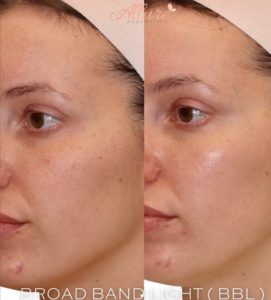
BBL®
BBL, or BroadBand Light, uses carefully selected filters and treatment parameters to address specific concerns. Depending on your skin and treatment plan, it may be customized to target pigmentation, vascular redness, or a combination of concerns during the same visit.
Best for: visible sun damage, uneven tone, freckling, redness, certain vascular concerns, and overall dullness. BBL may be used on the face, neck, chest, hands, arms, and other areas affected by sun exposure. Candidacy depends on factors such as skin tone, tanning status, the type of pigmentation present, and the nature and depth of any vascular concerns.
Although BBL’s primary strengths are pigmentation and redness, customized protocols may also improve luminosity, pores, fine lines, texture, and overall skin quality. When more significant resurfacing or textural correction is needed, a fractional laser may be the stronger choice.
Recovery: Recovery is generally lighter than with fractional resurfacing, although it varies by treatment area and settings. Patients may experience temporary redness, warmth, or mild swelling. Pigmented lesions may temporarily darken and gradually lift or fade over the following days.
Treatment plan: Some patients benefit from a single treatment, while others achieve their best results through a customized series and ongoing maintenance. The number and timing of treatments depend on your concerns, starting point, response, and long-term goals.
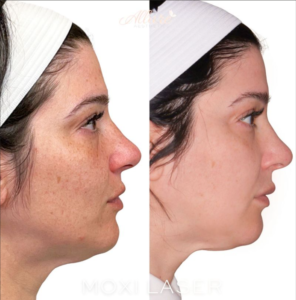
MOXI®
MOXI is a fractionated, non-ablative 1927 nm laser that creates controlled microscopic treatment zones in the superficial skin. This supports renewal and can improve visible pigmentation, tone, texture, and overall clarity.
Best for: early visible sun damage, uneven tone, dullness, enlarged-looking pores, and mild textural concerns. It can be an excellent option for patients seeking preventive maintenance or correction, regardless of age.
MOXI is highly customizable. A lighter treatment may involve minimal visible recovery, while increased density and energy can produce more noticeable bronzing, dryness, and flaking. The goal is not to create the most downtime possible; it is to select the appropriate treatment endpoint for your skin and goals.
Recovery: Depending on the treatment settings, the skin may feel warm and appear pink shortly afterward. A dry or sandpapery texture, bronzing, and light flaking can develop over the next several days. We will review what to expect based on the specific treatment plan selected for you.
Treatment plan: MOXI may be recommended as a single refresh or as part of a series. The number and timing of treatments are based on your goals, baseline skin condition, response, and desired level of correction.
MOXI can be appropriate for a broad range of skin tones, but recent tanning, sunburn, irritation, and individual pigmentary risk must still be carefully evaluated before treatment.
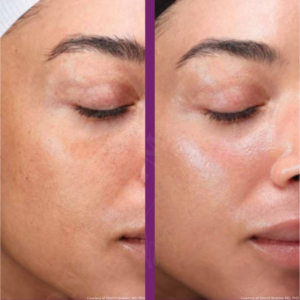
HALO® TRIBRID™
HALO TRIBRID brings three independently controlled wavelengths together in one advanced resurfacing platform: 2940 nm for controlled superficial ablation and textural refinement, 1927 nm for non-ablative treatment of pigmentation and clarity, and 1470 nm for deeper dermal renewal.
Pigmentation, surface irregularity, pores, scars, and signs of dermal aging do not all originate at the same depth. HALO TRIBRID allows us to address multiple layers of concern within one highly customized resurfacing plan.
Best for: patients seeking more comprehensive correction of multiple concerns, including pigmentation, texture, pores, scarring, and visible signs of aging.
Its independently controlled wavelengths give us a broader ability to customize treatment depth, intensity, and focus. It can be used as a standalone treatment or thoughtfully integrated with BBL, MOXI, skincare, and other elements of a comprehensive skin plan.
Because HALO TRIBRID offers an exceptional degree of customization, consultation and treatment planning are required. This gives us the opportunity to evaluate candidacy, prepare the skin when necessary, discuss expected recovery, and determine the appropriate treatment or combination of treatments.
Recovery: Recovery depends heavily on how the treatment is customized. Patients may experience redness, swelling, bronzing, dryness, and flaking, with more corrective plans generally involving more visible recovery. Your expected downtime will be reviewed clearly before treatment.
Treatment plan: HALO TRIBRID may be selected when more comprehensive correction is desired. The number of treatments is individualized according to your skin, goals, treatment intensity, and response.
HALO TRIBRID builds on Sciton’s established fractional resurfacing wavelengths while bringing all three into one independently controlled platform. As with every advanced treatment we introduce, our approach centers on careful patient selection, individualized preparation, thoughtful clinical judgment, and close attention to outcomes.
3. What to Pause and When
We will give you clear, personalized instructions before your appointment, so you will not have to guess.
Depending on your skincare routine and the treatment being performed, we may ask you to temporarily pause retinoids, exfoliating acids, prescription topicals, or other potentially irritating products. These products do not simply “thin” the skin, but they can contribute to dryness, sensitivity, or irritation in some patients. The timing will depend on the specific products you use, how often you use them, and how your skin is behaving.
Hair-removal methods such as waxing, threading, or depilatory creams may also need to be paused before treatment because they can leave the skin more sensitive. Shaving is often acceptable, but we will confirm what is appropriate for your treatment area.
It is equally important to share a complete list of medications and supplements with your provider. Certain prescriptions, medical conditions, and recent treatments may affect your candidacy or require medical clearance. Pregnancy, breastfeeding, active infection, recent isotretinoin use, impaired healing, and a history of abnormal scarring are all important to disclose during your consultation.
Please also let us know if you have a history of cold sores. Preventive medication may be recommended before certain treatments, but it needs to be planned in advance.
Acne does not automatically rule out laser treatment. However, active infection, significant inflammation, or open lesions may require us to adjust or postpone the appointment. We will evaluate your skin and make the safest recommendation rather than applying one rule to every breakout. This reflects Melissa’s guidance to make medication, skincare, and acne decisions individualized rather than relying on universal timelines.
4. The Appointment: What to Expect
For many patients, knowing what will happen beforehand makes the appointment feel much easier.
The length of your visit will depend on if it requires topical numbing. Before your appointment, we will review how long to plan for, whether numbing is included, and what the treatment itself will involve.
Comfort also varies by treatment and individual sensitivity. You may feel brief warmth, quick snapping sensations, or a gradual prickly heat across the treatment area. We use several measures to make the experience as manageable as possible, which may include chilled air from the Zimmer cooling system and, when appropriate, patient-controlled Nitronox.
Most importantly, you do not need to stay quiet if something feels uncomfortable. Let us know throughout the treatment so we can support you and make appropriate adjustments.
Treatment time should not be presented as one universal number because BBL®, MOXI®, HALO® TRIBRID™, combination treatments, and different treatment areas all require different appointment lengths.
5. Following Your Aftercare Plan
Aftercare is one of the most important parts of your treatment, but it does not need to feel complicated.
Recovery looks different after BBL, MOXI, and HALO TRIBRID. It can also vary based on the treatment area, settings used, and your individual response. Before you leave, we will explain what is normal for your specific treatment, which products to use, what to avoid, and when to contact us.
Depending on your plan, you may experience temporary warmth, redness, swelling, dryness, bronzing, or flaking. Pigmented lesions may darken temporarily after a pigment-focused treatment and then gradually lift or fade, but this does not occur with every technology or in every treated area.
Your instructions may include cleansing gently with lukewarm water, using approved moisturizers, applying cool compresses, and sleeping with your head slightly elevated. Follow the regimen provided to you rather than adding new products while the skin is recovering.
One of the most helpful things you can do is allow your skin to heal on its own timeline. Avoid picking, peeling, scrubbing, cleansing brushes, exfoliants, or unapproved active ingredients until your provider tells you it is safe to resume them.
Please contact us if something feels unusual or concerning—particularly blistering, increasing pain, spreading redness, drainage, or other signs of a possible infection. We would always rather hear from you early and determine that everything is progressing normally.
This treatment-specific approach avoids applying one resurfacing recovery timeline to every BBL, MOXI, or HALO TRIBRID patient.

6. Sun Protection: How You Protect Your Investment
Daily sun protection matters before laser treatment, during recovery, and long after your skin has healed.
Freshly treated skin may be more vulnerable to sun exposure, and unprotected exposure can increase the risk of irritation, unwanted pigmentation, and the return of visible sun damage. Your provider will explain when you can resume sunscreen and which formula is appropriate for your stage of recovery.
Once approved, use a broad-spectrum sunscreen every day, reapply when you are outdoors, and add physical protection such as a hat and shade whenever possible.
Sun protection is not only part of recovery. It is one of the most effective ways to preserve the clarity, evenness, and radiance you worked to achieve. Laser treatments can address existing damage, but they cannot prevent new sun exposure from creating more.
The Takeaway
The best laser results are created through thoughtful planning—not simply by choosing a device.
Give your provider enough time to evaluate recent sun exposure and prepare your skin when needed. Be open about your skincare routine, medications, health history, travel, upcoming events, and comfort with recovery. Follow the instructions you receive before and after treatment, and protect your results with consistent sun care.
At Allure, the goal is not to fit every patient into the same protocol. It is to understand your skin, select the right technology and settings, and create a plan that is safe, realistic, and designed around the result you want.
Ready to find out which treatment may be right for your skin? Book a consultation and let us create a personalized plan for your fall.
Common Questions
How long does a laser appointment take?
Appointment length varies according to the technology, treatment area, treatment intensity, and whether multiple modalities are being combined. Some appointments include topical numbing for 30 minutes to 1 hour, while others do not. We will tell you how much time to reserve when your treatment plan is created.
How far in advance should I plan my treatment?
There is no single timeline that applies to everyone. Planning may depend on recent sun exposure, your skin condition, the treatment selected, any recommended preparation, and upcoming travel or events. Scheduling a consultation several weeks in advance gives us time to create the safest and most effective plan.
Why can pigmentation look darker after treatment?
After some pigment-focused treatments, treated lesions may temporarily darken before gradually lifting or fading. This is not expected after every treatment or in every area. Your provider will explain what is normal for the technology and settings used and how to care for your skin as it recovers.
What is the difference between BBL, MOXI, and HALO TRIBRID?
BBL uses carefully selected filters and treatment parameters to address pigmentation, vascular redness, and overall skin quality.
MOXI is a fractionated, non-ablative 1927 nm laser that supports renewal in the superficial skin and may improve tone, pigmentation, texture, and clarity.
HALO TRIBRID combines three independently controlled wavelengths that can address concerns at multiple levels of the skin within one customized resurfacing plan.
Their capabilities overlap, and the best choice depends on your skin, goals, candidacy, and preferred recovery—not simply the name of the device.
When is the best time of year for laser treatment?
Fall and winter are popular because many people naturally spend less time in strong sun. However, your personal schedule matters more than the season alone. A sunny vacation, outdoor lifestyle, or upcoming event may affect your timing at any point in the year. Your consultation helps us identify the safest window for you.
References
Bin Dakhil, A., Shadid, A. and Altalhab, S. (2023). “Post-inflammatory hyperpigmentation after carbon dioxide laser: review of prevention and risk factors.” Dermatology Reports, 15(4), 9703.
The Contini, Li, and Waibel references should be removed because the related claims and evidence-review sections have been removed or reframed.